
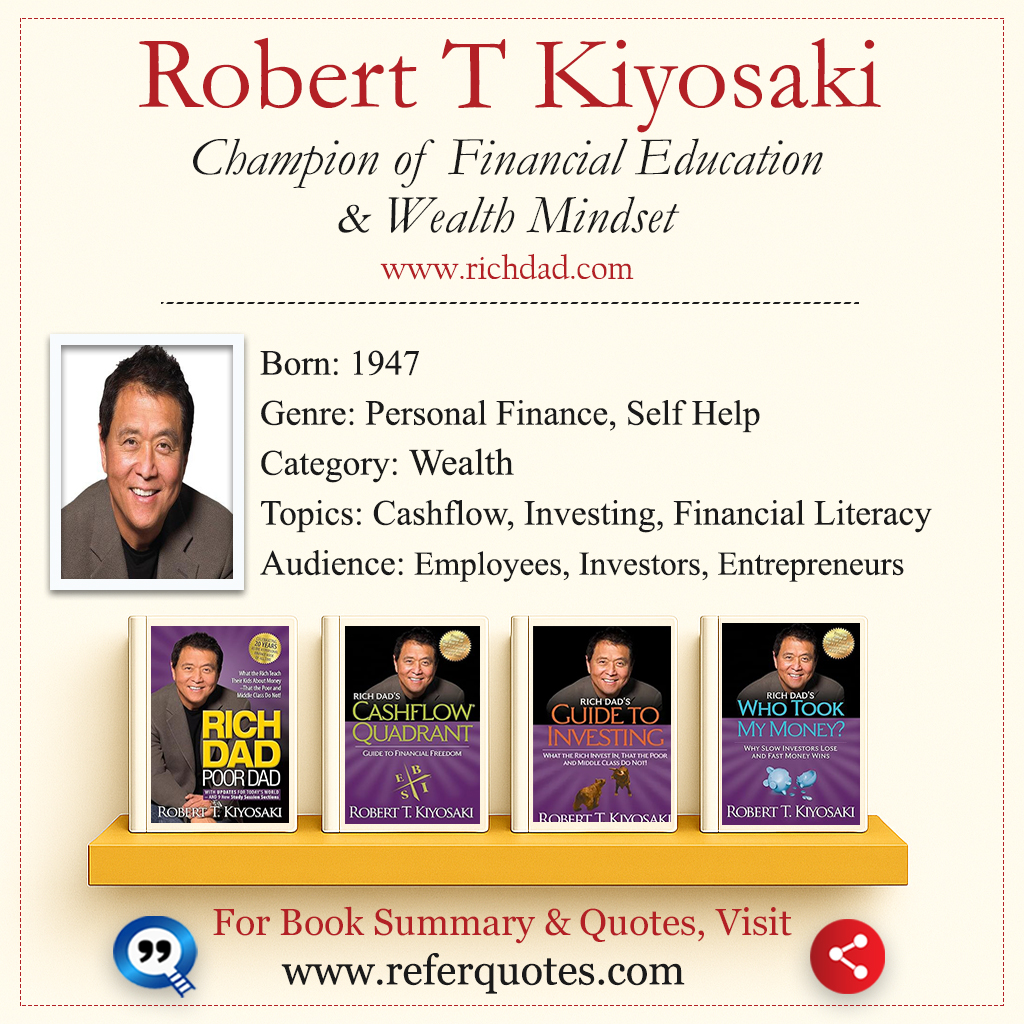
Biography
Born in Hilo, Hawaii, Robert T. Kiyosaki graduated from the United States Merchant Marine Academy and served as a Marine Corps helicopter gunship pilot in Vietnam. After stints at Xerox and entrepreneurial ventures, he turned to financial education, co-authoring Rich Dad Poor Dad in 1997 and launching the Rich Dad brand. He invests in real estate and commodities and hosts the Rich Dad Radio Show. The Robert T. Kiyosaki book list spans personal finance classics like Cashflow Quadrant and Rich Dad’s Guide to Investing, along with educational games and seminars.
Author Summary
| Language | English (564) |
|---|---|
| Born On | 1947 (2) |
| Genre | personal finance (2), self-help (89) |
| Category | Wealth (116) |
| Topics | cashflow (3), entrepreneurship (6), financial literacy (4), investing (2), real estate (1) |
| Audiences | employees (12), entrepreneurs (199), investors (91), students (414) |
Popularity Score
Robert T Kiyosaki Book list
Click book name to see chapterwise and video book summary
Robert T. Kiyosaki is an American entrepreneur, investor, and bestselling author best known for Rich Dad Poor Dad, a breakout book that popularized financial literacy and asset building. Through the Rich Dad Company and his CASHFLOW board games, he teaches how to escape the rat race and build passive income. He speaks widely about money, investing, and entrepreneurship, influencing millions worldwide. For readers exploring the Robert T. Kiyosaki book list, cornerstone titles include Rich Dad Poor Dad, Cashflow Quadrant, and Rich Dad’s Guide to Investing.
Interview Questions
Why did you write Rich Dad Poor Dad?
I wanted to teach the financial lessons I didn’t learn in school—how money works, the difference between assets and liabilities, and why financial education matters more than a high salary.
What is the key idea behind the CASHFLOW Quadrant?
People earn money as employees, self-employed, business owners, or investors. The right side (business owners and investors) focuses on building systems and assets that generate passive income and financial freedom.
Do you recommend gold, silver, or bitcoin?
I view them as hedges against inflation and currency debasement. I prefer assets outside the banking system and encourage people to study and decide based on risk tolerance and education.
Is college necessary for financial success?
Education is vital, but traditional schooling rarely teaches money. I advocate financial education—understanding cash flow, taxes, debt, and assets—regardless of whether you pursue a degree.
How should a beginner start investing?
Begin with financial literacy: learn how to read financial statements, define assets versus liabilities, and start small. Focus on cash-flowing assets like real estate or businesses you understand.
What’s the biggest money mistake people make?
Buying liabilities they think are assets—like homes or cars that drain cash flow—while neglecting investments that put money in their pocket.