
- Simple frameworks to decode symptoms and build a personalized plan.
- Evidence-based guidance to improve microbiome health, reduce stress, and protect long-term wellbeing.
Book Summary
| Language | English (556) |
|---|---|
| Timeperiod | 21st Century (229) |
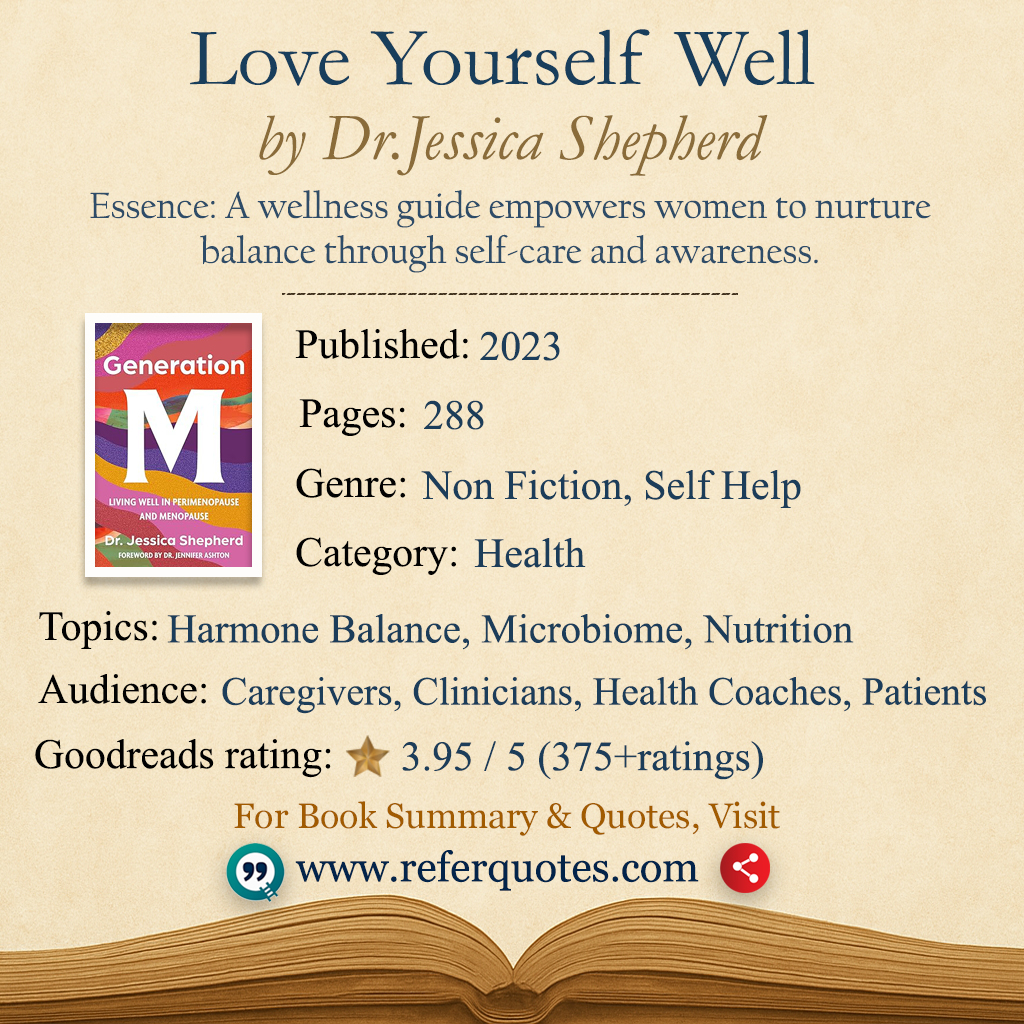
| Genre | nonfiction (88), self-help (89) |
| Category | Health (56) |
| Topics | hormone balance (1), mental health (3), microbiome (2), nutrition (13), women's health (3) |
| Audiences | caregivers (12), clinicians (7), health coaches (6), patients (21), women (14) |
Table of Contents
- What’s Inside Love Yourself Well: An Empowering Wellness Guide to Supporting Your Gut, Brain, and Vagina
- Book Summary
- Chapter Summary
- Love Yourself Well: An Empowering Wellness Guide to Supporting Your Gut, Brain, and Vagina Insights
- Usage & Application
- Life Lessons
- FAQ
- Famous Quotes from Love Yourself Well: An Empowering Wellness Guide to Supporting Your Gut, Brain, and Vagina
What’s Inside Love Yourself Well: An Empowering Wellness Guide to Supporting Your Gut, Brain, and Vagina
Synopsis
A doctor-led, user-friendly guide that connects the gut, brain, and vaginal microbiomes, translating science into routines, foods, and habits that reduce symptoms, balance hormones, support mood and libido, and build lasting, personalized wellness.
Book Summary
- The gut–brain–vagina axis is real, and measurable through symptoms and habits.
- Nutrition, sleep, and stress management directly shape microbiome balance and hormones.
- Clear protocols can reduce BV/yeast recurrence and PMS/PMDD intensity.
- Tracking patterns empowers smarter conversations with your clinician.
- Small, consistent changes beat all-or-nothing plans over time.
Chapter Summary
- Chapter 1: Rethinking Women’s Wellness – Why the gut–brain–vagina axis matters and how to use this book.
- Chapter 2: The Gut Microbiome – Digestion, dysbiosis, and food foundations to support balance.
- Chapter 3: The Brain Connection – Stress, sleep, and mood tools that shift hormones and symptoms.
- Chapter 4: The Vaginal Microbiome – pH, lactobacilli, and strategies to reduce BV/yeast recurrence.
- Chapter 5: Hormones Across Life Stages – Puberty to perimenopause and what “normal” looks like.
- Chapter 6: Nutrition & Supplements – Evidence-informed foods, fibers, and when to consider probiotics.
- Chapter 7: Movement & Recovery – Exercise, pelvic floor basics, and rest routines for resilience.
- Chapter 8: Sexual Health & Pleasure – Desire, pain, lubrication, and communication skills.
- Chapter 9: Symptom Protocols – Step-by-step plans for common patterns (PMS, bloating, UTIs).
- Chapter 10: Your Care Team – Tracking, labs, and advocating for the care you deserve.
Love Yourself Well: An Empowering Wellness Guide to Supporting Your Gut, Brain, and Vagina Insights
| Book Title | Love Yourself Well |
| Book Subtitle | An Empowering Wellness Guide to Supporting Your Gut, Brain, and Vagina |
| Author | Dr. Jessica Shepherd |
| Publisher | Unknown |
| Translation | Original: English; no translations reported. |
| Details | Publication Year/Date: 2023; ISBN/Unique Identifier: 9780063289408; Last Edition: 1st Edition; Number of Pages: 288. |
| Goodreads Rating | 3.95 / 5 - 375 ratings - 28 reviews |
About the Author
Dr. Jessica Shepherd is women’s health expert with nearly 20 years of clinical experience. She is a prolific author and regular medical contributor for USA Today, Women’s Health, and CBS News.
Usage & Application
How to Use This Book
Here’s how to put this into practice fast.
Scenario 1: You’re battling recurring BV or yeast. Track triggers for 14 days, add 25–30g daily fiber, swap scented products for pH-friendly care, and ask your clinician about targeted lactobacillus strains. Most people see fewer flares within 4–6 weeks.
Scenario 2: Perimenopause brain fog and mood dips. Add a consistent sleep window, 2–3 strength sessions weekly, and a protein target of 1.2–1.6g/kg/day; combine with magnesium glycinate at night (if appropriate).
Scenario 3: IBS + anxiety loop. Use a low-FODMAP trial (2–4 weeks) with stress throttles (breathwork, 10-minute walks after meals); reintroduce foods slowly and monitor symptoms. Track data weekly, iterate one variable at a time, and bring notes to your next appointment to get faster, better care.
Video Book Summary
Life Lessons
- Symptoms are signals; mapping patterns reveals root drivers you can change.
- Small daily levers, fiber, sleep, stress tools, compound into hormone and mood stability.
- Microbiome health is interconnected; support one system and others often improve.
- Self-advocacy and clear tracking accelerate effective, patient-centered care.
- Consistency beats intensity; sustainable habits outperform short-term fixes.