
Book Summary
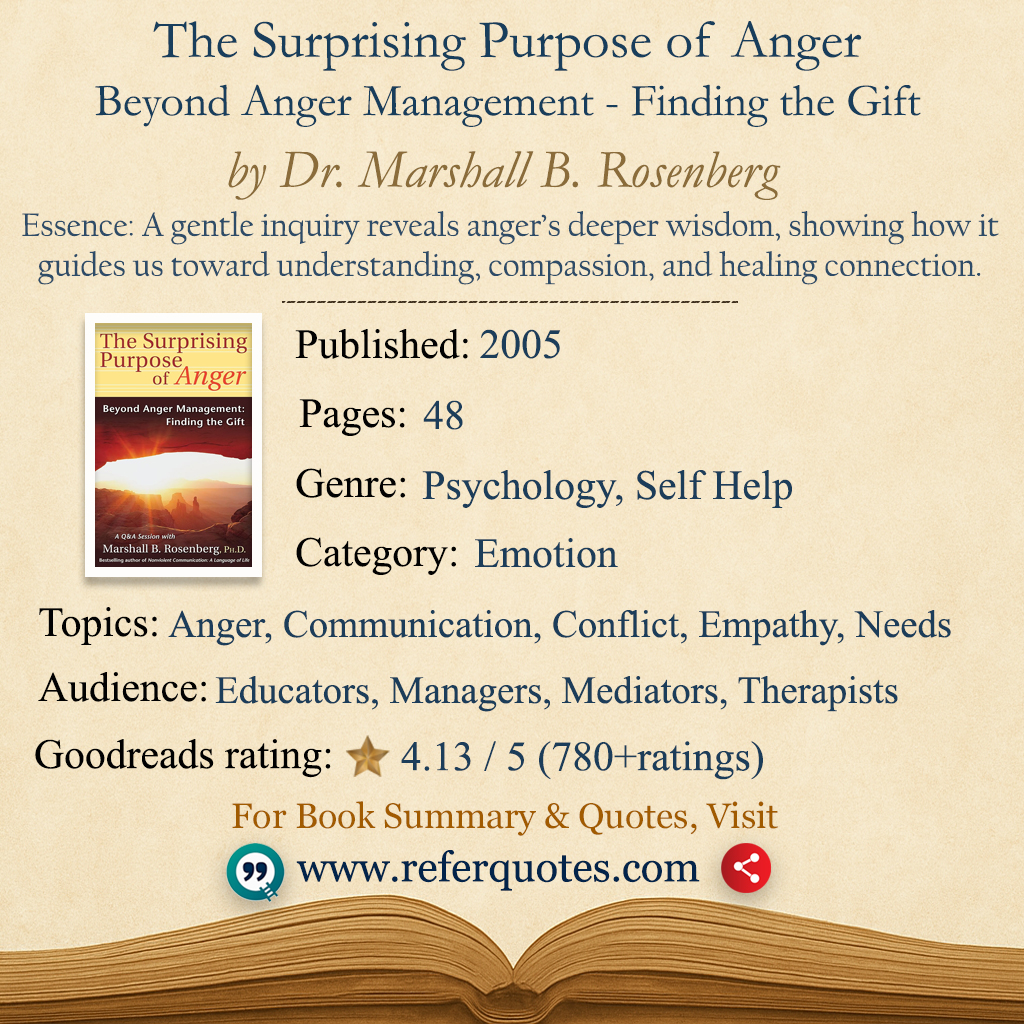
| Language | English (582) |
|---|---|
| Published On | 2005 (5) |
| Timeperiod | Contemporary (222) |
| Genre | psychology (18), self-help (89) |
| Category | Emotion (15) |
| Topics | anger (1), communication (51), conflict (20), empathy (38), needs (3) |
| Audiences | educators (32), managers (142), mediators (10), parents (59), therapists (53) |
Table of Contents
- What’s Inside The Surprising Purpose of Anger: Beyond Anger Management – Finding the Gift
- Book Summary
- Chapter Summary
- The Surprising Purpose of Anger: Beyond Anger Management – Finding the Gift Insights
- Usage & Application
- Life Lessons
- FAQ
- Famous Quotes from The Surprising Purpose of Anger: Beyond Anger Management – Finding the Gift
What’s Inside The Surprising Purpose of Anger: Beyond Anger Management – Finding the Gift
Synopsis
Rosenberg reframes anger as a signal of unmet needs, then teaches Nonviolent Communication to translate blame and judgment into clear feelings, needs, and actionable requests that foster understanding, choice, and change in families, workplaces, and communities.
Book Summary
The Surprising Purpose of Anger book summary: Dr. Marshall B. Rosenberg explains that anger is not the enemy, it’s a valuable messenger pointing to unmet needs. This book talks about how to move from blame and judgment to clarity, empathy, and requests that work. Using Nonviolent Communication (NVC), Rosenberg offers scripts, examples, and a four-step process to transform conflict into connection. Why is this book important? Because most anger strategies suppress or explode; this one converts the energy of anger into life-serving action you can use today. It resonates across relationships, leadership, and community work because the core is universal: needs drive behavior.
Key takeaways:
• Anger signals unmet needs, identify them before acting
• Shift from judgments (“should/shouldn’t”) to feelings and needs
• Make specific, doable requests instead of vague demands
• Self empathy first; then empathize with others
• Replace punishment with strategies that meet needs.
Chapter Summary
-
The Message of Anger – Anger signals unmet needs, not bad behavior or others’ faults.
-
Getting Past Blame – Move from judging others to identifying your own needs beneath the anger.
-
The Purpose of Anger – Use anger as a wake-up call to reconnect with what truly matters to you.
-
From Anger to Connection – Translate angry thoughts into clear feelings and life-serving requests.
-
Expressing Anger Fully – Take responsibility for your emotions before speaking them out loud.
-
Empathy and Healing – Listening with empathy transforms anger into understanding and compassion.
-
Transforming Relationships – Using NVC (Nonviolent Communication) builds trust even in conflict.
-
Living Peacefully – When needs are acknowledged, anger loses power and connection deepens.
The Surprising Purpose of Anger: Beyond Anger Management – Finding the Gift Insights
| Book Title | The Surprising Purpose of Anger |
| Book Subtitle | Beyond Anger Management – Finding the Gift |
| Author | Marshall B. Rosenberg, PhD |
| Publisher | PuddleDancer Press |
| Translation | Original language: English; no translation required. |
| Details | Publication Year: 2005; ISBN: 978-1-892005-13-4; Last edition: 2005; Number of pages: 48 |
| Goodreads Rating | 4.13 / 5 – 780 ratings – 80 reviews |
Usage & Application
How to Use This Book
Stop losing customers, teammates, or loved ones to avoidable blowups.
Try this: the next time you’re triggered, pause and name three facts (no judgments), one feeling, and the key need (respect, safety, clarity). Then make a specific request.
Scenario 1: At work, a deadline slips. Instead of “You never deliver,” say, “When the report arrived Friday (fact), I felt anxious (feeling) because I need reliability (need). Would you confirm timelines every Tuesday at 10am? (request)”
Scenario 2: Parenting conflict. Swap “Stop talking back” for “When I hear a loud voice, I feel overwhelmed because I need cooperation. Would you speak at a 3 and tell me what you want?”
Run A/B tests: track responses for two weeks, expect a 30–50% drop in escalations when you lead with needs and clear requests.
Video Book Summary
Life Lessons
- Anger is a wake-up call to unmet needs, not proof that others are wrong.
- Judgments intensify anger; translating them into feelings and needs reduces reactivity.
- Self-empathy is the fastest route from rage to choice.
- Clear, doable requests outperform blame and punishment in changing behavior.
- When needs are understood, collaboration becomes easier than coercion.