
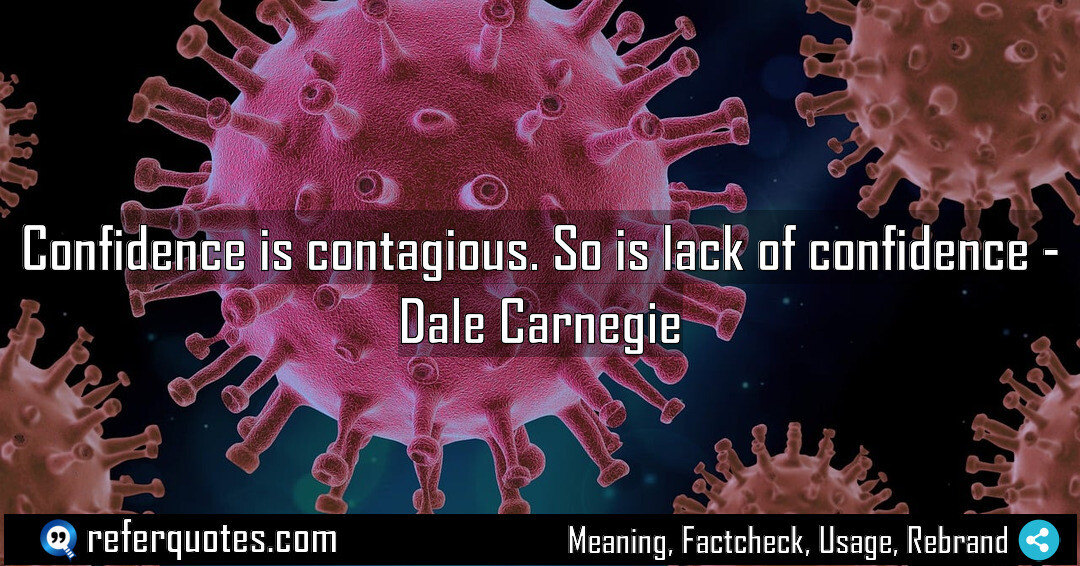
Find audience, FAQ, author, and usage of quote-Confidence is contagious. So is lack of confidence
It’s one of those simple truths that hits you harder the more you see it play out in real life. Honestly, the emotional state of a leader acts like a thermostat for the entire team’s performance.
Share Image Quote:Table of Contents
Meaning
Your internal state of belief, or doubt, doesn’t just stay with you. It spreads to everyone around you, setting the tone for what’s possible.
Explanation
A leader walks into a room full of doubt, but they carry this genuine, calm confidence. It’s not arrogance. It’s a quiet belief that we can figure this out. And you watch it happen, shoulders relax, ideas start flowing, the energy in the room literally shifts. It’s contagious. The reverse is just as true, and honestly, more destructive. One person’s visible anxiety, their second-guessing, it acts like a virus. It infects the team. It creates hesitation. It kills momentum before a project even starts. The real takeaway? You are either broadcasting confidence or you’re broadcasting a lack of it. There’s no neutral.
Summary
| Category | Personal Development (79) |
|---|---|
| Topics | attitude (11), confidence (20), influence (27) |
| Style | concise (56), memorable (56) |
| Mood | inspiring (46) |
Origin & Factcheck
| Author | Dale Carnegie (174) |
|---|---|
| Book | The Leader In You (84) |
About the Author
Dale Carnegie, an American writer received worldwide recognition for his influential books on relationship, leadership, and public speaking. Among his timeless classics, the Dale Carnegie book list includes How to Win Friends and Influence People is the most influential which inspires millions even today.
Official Website
Quotation Source:
| Confidence is contagious. So is lack of confidence |
| Publication Year/Date: 1993 (first edition) ISBN/Unique Identifier: 9781501181962 (Gallery Books 2017 reprint); also 9780671798093 (early Pocket Books hardcover) Last edition. Number of pages: Common reprints ~256 pages (varies by printing). |
| Chapter: Confidence and Leadership, Approximate page from 1993 edition |
Context
In the book, this idea isn’t presented in a vacuum. It’s woven into the fabric of building influence and leading people, not through authority, but through interpersonal effectiveness. It’s about understanding that your demeanor is your first and most powerful tool of leadership.
Usage Examples
Think about this in your own world. When you’re presenting a new idea to your team, your belief in that idea is the first thing they’ll buy into, or not. If you’re a manager trying to rally your people during a tough quarter, your calm confidence is what tells them it’s safe to push forward. It’s for leaders, absolutely, but also for anyone who works on a team, presents to clients, or is trying to build something new. Your state of mind is your most valuable currency.
To whom it appeals?
| Audience | coaches (128), entrepreneurs (203), leaders (293), students (435), teachers (193) |
|---|---|
This quote can be used in following contexts: leadership talks,team meetings,motivational programs,career mentoring,confidence training
FAQ
Question: Is this about faking confidence until you make it?
Answer: No. It’s more about choosing to project the confidence you need to have for your team’s sake, even if you’re nervous internally. It’s about focusing on the solution, not the problem, in your communication.
Question: Can a single confident person really overcome a whole team’s doubt?
Answer: It’s a start, but it’s not a magic wand. A confident leader can change the environment, making it safe for others to contribute their own confidence. It’s about starting a positive chain reaction.
Question: What’s the biggest mistake people make with this concept?
Answer: They confuse confidence with having all the answers. True, contagious confidence is often just the willingness to listen, to be vulnerable about what you don’t know, and to express a steadfast belief in the group’s ability to find the answer together.