
Table of Contents
Meaning
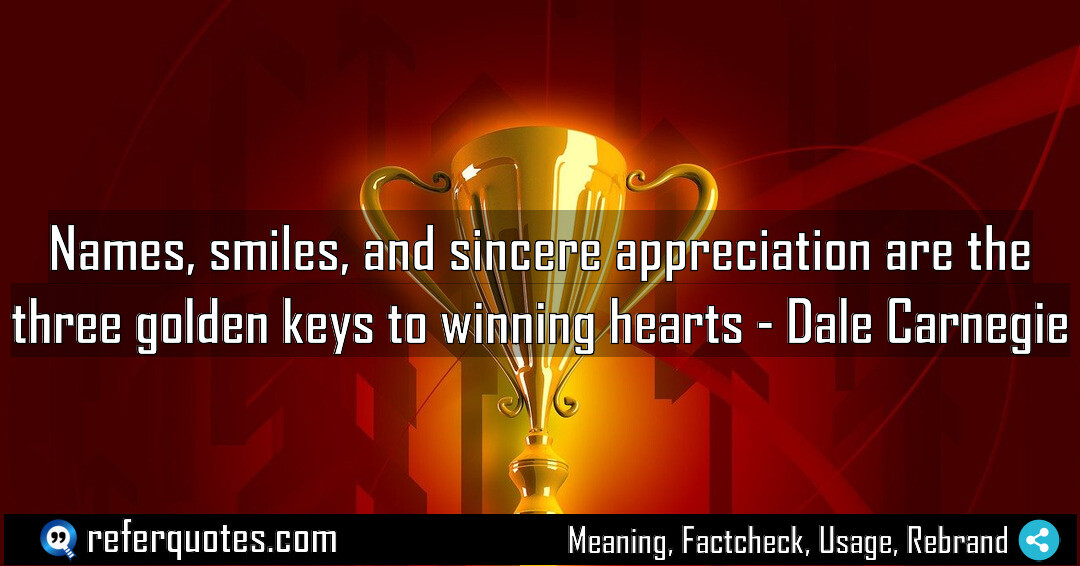
This quote means that human connection isn’t about grand gestures; it’s about mastering the small, fundamental acts of making someone feel seen, welcomed, and valued.
Explanation
It’s a three-part system. Names, that’s the sweetest sound to any person. Using someone’s name is a psychological handshake that says, You matter as an individual. Then, Smiles, a real one, not a forced corporate grin. The one most people mess up: Sincere Appreciation. Not a generic good job. It’s the specific, genuine acknowledgment of someone’s effort or idea. When you combine all three, you’re not just being nice, you’re building trust.
Summary
| Category | Love (13) |
|---|---|
| Topics | appreciation (9), connection (35), identity (13), smile (1) |
| Style | didactic (51), memorable (56) |
| Mood | positive (13), uplifting (13) |
Origin & Factcheck
This wisdom comes from How to Win Friends and Influence People. While the exact phrasing is often paraphrased, the concept is a cornerstone of his teachings. You’ll sometimes see similar sentiments misattributed to other self-help gurus, but all three things are covered extensively in Dale Carnegie’s book.
| Author | Dale Carnegie (168) |
|---|---|
| Book | How to Win Friends and Influence People (43) |
About the Author
Dale Carnegie, an American writer received worldwide recognition for his influential books on relationship, leadership, and public speaking. Among his timeless classics, the Dale Carnegie book list includes How to Win Friends and Influence People is the most influential which inspires millions even today.
Official Website
Quotation Source:
| Names, smiles, and sincere appreciation are the three golden keys to winning hearts |
| Publication Year: 1936, Revised Edition 1981, ISBN: 9780671723651, Pages 280 |
| Part Two: Six Ways to Make People Like You |
Context
“One way to warm it up,” he said, “is to remember people’s names. The executive who tells me he can’t remember names is at the same time telling me he can’t remember a significant part of his business and is operating on quicksand.”
Usage Examples
Think about this in your day-to-day activity and practice,
- For a Manager: Instead of Team did well, try, Vishwa, that report you put together was incredibly thorough. I especially appreciated the market analysis on page three. Thank you. See the difference? Name, specific appreciation, and a smile while you say it.
- For a Salesperson: Greet a client with a warm smile, use their name in the conversation, and later, send a note that says, John, I sincerely appreciate you taking the time to walk me through your challenges today.
- For Anyone: At the coffee shop, smile at the barista, read their name tag, and say, Thanks so much, Mike. Have a great day. It transforms a transaction into a moment of human connection.
To whom it appeals?
| Audience | leaders (285), marketers (20), speakers (19), students (420), teachers (187) |
|---|---|
This quote can be used in following contexts: customer service,relationship advice,motivational speaking,leadership communication,team development
Common Questions
Question: What if using someone’s name feels awkward or forced?
Answer: It will at first! That’s normal. The key is practice. Start naturally, maybe once in a conversation. “That’s a great point, David”. It gets easier and more authentic with time.
Question: How do I make sure my appreciation is sincere?
Answer: You have to look for something to appreciate. Be specific. Generic praise feels hollow. Sincere appreciation comes from actually paying attention to what the other person has done.
Question: Isn’t this just basic manners? Why is it such a big deal?
Answer: You’re right, it is basic. In a distracted world, basic, genuine manners have become a rare and powerful currency. They make you stand out because so few people consistently do it.
Question: Can this be used manipulatively?
Answer: Absolutely, and that’s the danger. If you’re faking the smile or the sincerity, people will sense it. The goal isn’t to win something from them; it’s to build a real relationship. The influence and the winning are a byproduct of genuine connection.