
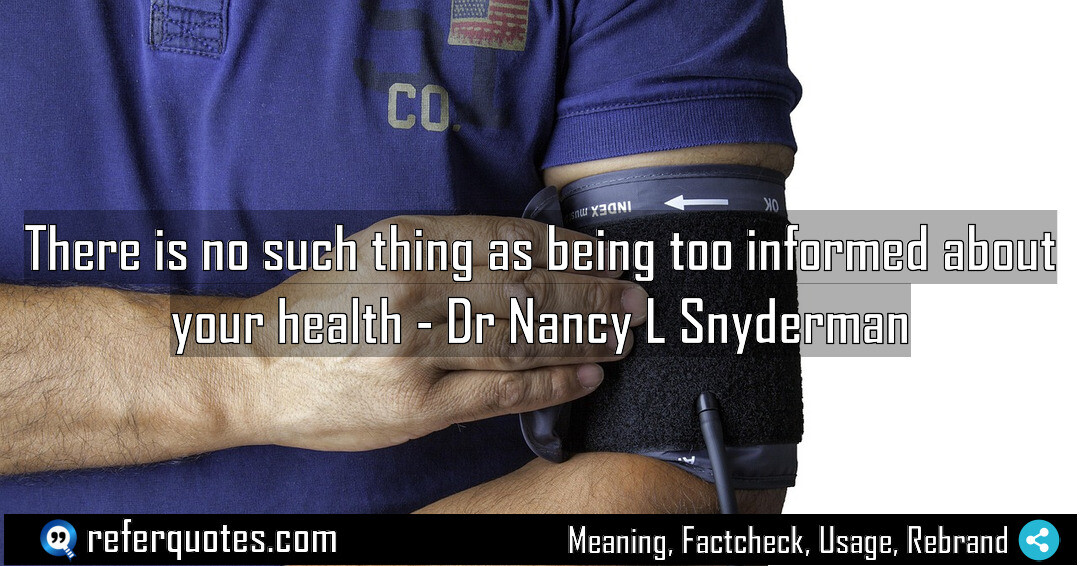
Find related quotes, author, meaning, factcheck, context and audience of quote – There is no such thing as being too informed about your health.
Knowledge is your best medicine. This quote reminds us that there is no such thing as being too aware of your own health. The more you understand your body, your risks, and your options, the stronger your ability to protect yourself and those you love.
Table of Contents
Meaning
The message is simple. Knowing more about your body puts you in a stronger place. It gives you clarity when things feel uncertain and helps you understand what your body is trying to tell you. This kind of knowledge is not about becoming an expert. It is about feeling safe in your own skin and knowing enough to make choices that support your wellbeing.
Explanation
I have watched many people hesitate to ask questions because they worry about sounding dramatic or uninformed. Others avoid reading about their symptoms because they fear what they might find. Nancy Snyderman’s message cuts through that fear. She is not encouraging obsessive searching. She is reminding you that the right knowledge, gathered with intention, helps you move from feeling powerless to becoming an active participant in your care. When you understand what is happening in your body, you can communicate better with your doctor. You notice subtle changes earlier. You speak up when something feels out of alignment. And that simple act of staying informed becomes one of the strongest tools you have for long-term health.
Summary
| Category | Education (28) |
|---|---|
| Topics | awareness (8) |
| Style | didactic (52) |
| Mood | empowering (24) |
Origin & Factcheck
| Author | Dr Nancy L Snyderman (13) |
|---|---|
| Book | Medical Myths That Can Kill You: And the 101 Truths That Will Save, Extend, and Improve Your Life (13) |
About the Author
Dr. Nancy Lynn Snyderman is an physician and award-winning medical journalist with more than 40 years of experience in clinical medicine. Her journalism has earned multiple Emmy Awards.
Quotation Source:
| There is no such thing as being too informed about your health |
| Publication Year/Date: 2008, ISBN: 978-0345496312, Last Edition: 1st Edition, Number of Pages: 304 |
| Chapter: The Information Myth, Approximate page from 2008 edition |
Context
In her book, she takes direct aim at the confusion caused by health myths and misleading advice. She wants people to stop relying on hearsay and start using real, verified information to make decisions. Her message is practical, your health improves when you understand it. And you understand it by learning, asking, and staying involved.
Usage Examples
- For a patient: You get a new diagnosis. Instead of just nodding, you go home and you research reputable sources. You come back with a list of questions about treatment options, side effects, and long-term outcomes. That’s being informed.
- For a caregiver: You study your loved one’s health needs so you can support them with confidence when things get difficult.
- For anyone in everyday life: You learn simple safety skills like CPR or recognizing a stroke. That knowledge can save a life when every second counts.
To whom it appeals?
| Audience | Community (10), patients (21), students (422), teachers (187) |
|---|---|
This quote can be used in following contexts: educational seminars,health literacy programs,public service campaigns
FAQ
Question:Can too much information create fear or overwhelm?
Answer: It can if the information is random or unreliable. The goal is to focus on trusted sources and then speak with your doctor so that the information becomes grounding, not frightening.
Question: Does this suggest that I should question every doctor’s decision?
Answer:Not in a confrontational way. It means you participate in the conversation. You bring your observations and understanding so your doctor can guide you more effectively.
Question: Where’s the line between being informed and self-diagnosing dangerously?
Answer: Great question. The line is drawn at action. Being informed means you gather information to have a more productive conversation with a professional. Let your doctor guide the action while you guide the conversation. Self-diagnosing dangerously is when you skip the professional and make treatment decisions on your own. Big, big difference.