

Overview
- Learn preparation, delivery, and persuasion frameworks you can apply immediately.
- Use practice-driven confidence-building to reduce fear and increase influence.
Book Summary
| Language | English (592) |
|---|---|
| Published On | 1956 (1) |
| Timeperiod | Modern (140) |
| Genre | public speaking (1), self-help (89) |
| Category | Personal Development (79) |
| Topics | anxiety (1), persuasion (11), public speaking (6), self-confidence (1), storytelling (4) |
| Audiences | entrepreneurs (204), leaders (295), professionals (131), speakers (20), students (437) |
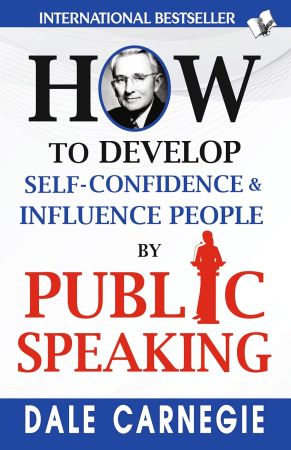
Table of Contents
- What’s Inside How to Develop Self-Confidence and Influence People by Public Speaking
- Book Summary
- Chapter Summary
- How to Develop Self-Confidence and Influence People by Public Speaking Insights
- Usage & Application
- Life Lessons
- FAQ
- Famous Quotes from How to Develop Self-Confidence and Influence People by Public Speaking
What’s Inside How to Develop Self-Confidence and Influence People by Public Speaking
Synopsis
A practical guide to overcoming stage fright, preparing compelling talks, and influencing audiences—built on Dale Carnegie’s training methods—so readers can speak with confidence, structure their message clearly, and persuade with credibility and heart.
Book Summary
Key takeaways:
- Confidence is a skill: plan, practice, and iterate with feedback loops.
- Structure wins: opening hooks, clear points, stories, and memorable closes.
- Persuasion relies on credibility, empathy, and evidence—delivered simply.
- Stories beat data alone; examples make ideas stick.
- Preparation reduces fear: rehearse under realistic conditions and start small.
Chapter Summary
-
Chapter 1: Developing Courage and Self-Confidence
Fear of speaking is universal problem. Your confidence grows with repeated practice and experience. -
Chapter 2: Self-Confidence through Preparation
Confidence must be built before you step on to the stage. You should know your subject deeply, plan your outline ahead, and rehearse multiple times. -
Chapter 3: How Famous Speakers Prepared Their Addresses
Great speakers spend lot of time collecting ideas, refining the speech structure, and forming conviction. -
Chapter 4: The Improvement of Memory
You can strengthen your memory through association and visualisation. When you are able to remember your points naturally, you will be able to speak freely without referring the notes. -
Chapter 5: Keeping the Audience Awake
You should hold audience attention by telling stories, humour, giving examples, and by showing enthusiasm. -
Chapter 6: Essential Elements in Successful Speaking
Central purpose, clear structure with logical flow, and enthusiasm form the core of an effective speech. -
Chapter 7: The Secret of Good Delivery
Delivery brings content to life. Use should use variations in tone, rhythm, pauses, gestures, and eye contact to express emotion and conviction. -
Chapter 8: Platform Presence and Personality
Be natural, look confident, and make yourself connected with your audience instead of acting. -
Chapter 9: How to Open a Talk
The beginning of the speech must capture user attention instantly. Always start with a story, question, or hard hitting fact to establish interest. -
Chapter 10: How to Close a Talk
You should end your talk by summarizing the core message, inspire them to take an action, or leave a memorable statement that lingers around in the audience’s mind. -
Chapter 11: How to Make Your Meaning Clear
Use simple and familiar words, short sentences, and real life examples to convey your central idea. -
Chapter 12: How to Be Impressive and Convincing
Influencing your audience comes from clarity, sincerity, and emotion. To persuade audience, understand and speak with their beliefs, not just the logic. -
Chapter 13: Improving Your Diction
Good speech should have clear pronunciation, correct emphasis on your central idea, and an expressive voice.
How to Develop Self-Confidence and Influence People by Public Speaking Insights
| Book Title | How to Develop Self-Confidence and Influence People by Public Speaking |
| Author | Dale Carnegie |
| Publisher | Simon & Schuster |
| Translation | Not applicable; originally published in English. |
| Details | Publication Year/Date: 1956 (compiled from Carnegie public speaking course notes) ISBN/Unique Identifier: 9780671746070 (Pocket Books reprint) Last edition. Number of pages: Common reprints ~240–300 pages (varies by printing) |
| Goodreads Rating |
About the Author
Dale Carnegie, an American writer received worldwide recognition for his influential books on relationship, leadership, and public speaking. Among his timeless classics, the Dale Carnegie book list includes How to Win Friends and Influence People is the most influential which inspires millions even today.
Official Website
Usage & Application
How to Use This Book
Here’s how to apply it like a pro:
1) Sales pitch next week? Use the book’s three-part structure (problem, proof, proposal). Open with a 30-second story that quantifies pain (e.g., “We lost 14% due to X”), then show a simple before/after slide, and close with a clear ask.
2) Team update on Monday? Ditch data dumps. Boil your message to one sentence, stack three supporting points, and tie each to a real customer or teammate story. Rehearse twice: once out loud, once with a timer. 3) Conference intro? Memorize the first and last 30 seconds, and bullet the middle. Use Carnegie’s nervous-to-power tactics: deep exhale, plant feet, hands relaxed, eyes up. Track results: engagement rate, questions asked, and next-step conversions. Improve 10% per talk.
Video Book Summary
Life Lessons
- Confidence is built, not bestowed—consistent practice shrinks fear.
- Speak to serve: focus on audience needs and outcomes, not your performance.
- Clarity wins—one message, three points, concrete examples.
- Stories persuade because people feel before they decide.
- Sincerity and preparation beat polish and theatrics every time.