
- Confidence comes from deliberate practice and preparation.
- Vocal variety, structure, and storytelling turn ideas into influence.
Book Summary
| Language | English (588) |
|---|---|
| Published On | 1915 (1) |
| Timeperiod | Modern (138) |
| Genre | nonfiction (88), self-help (89) |
| Category | Skill (89) |
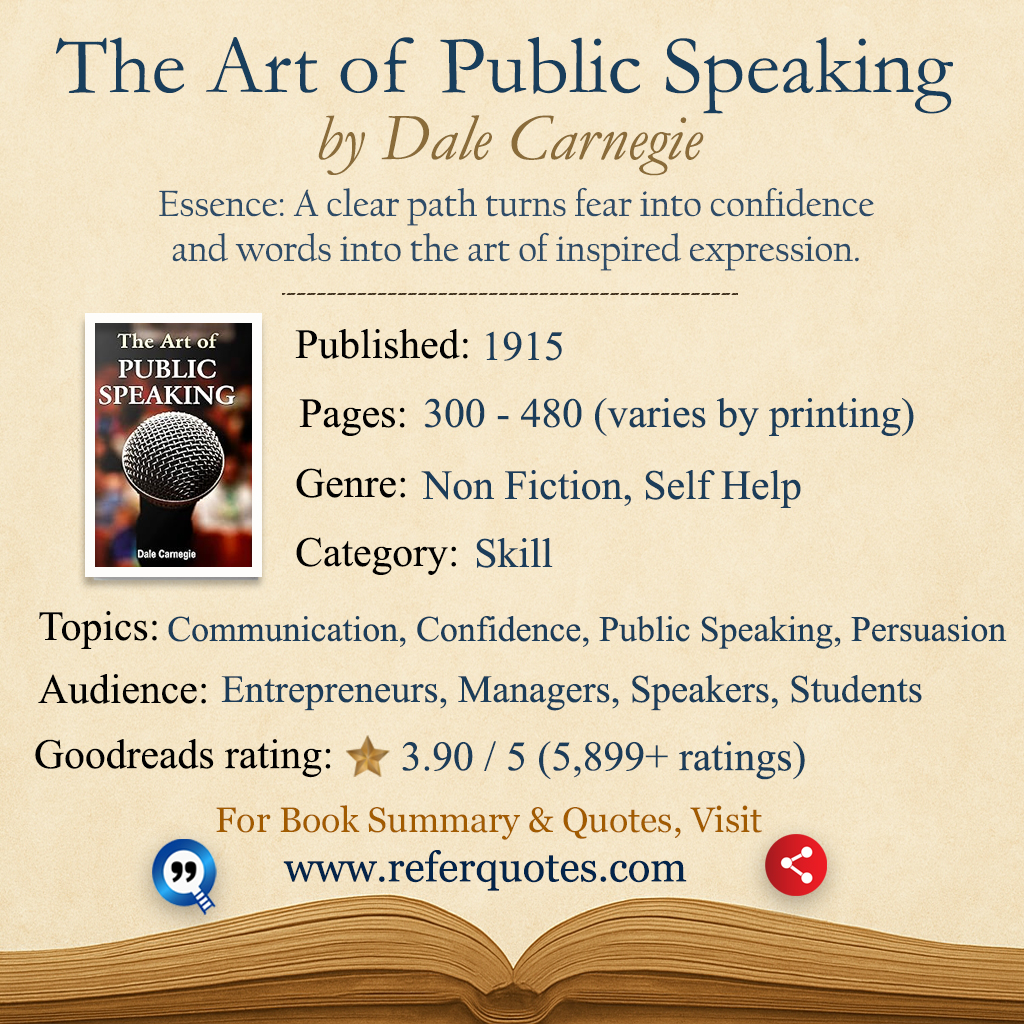
| Topics | communication (51), confidence (20), persuasion (11), public speaking (6), rhetoric (1) |
| Audiences | entrepreneurs (203), managers (142), professionals (131), speakers (20), students (435) |
Table of Contents
- What’s Inside The Art of Public Speaking
- Book Summary
- Chapter Summary
- The Art of Public Speaking Insights
- Usage & Application
- Life Lessons
- FAQ
- Famous Quotes from The Art of Public Speaking
What’s Inside The Art of Public Speaking
Synopsis
A practical, exercise-driven guide to building confidence, crafting clear messages, and delivering persuasive speeches using voice control, structure, and audience-focused storytelling, drawn from Dale Carnegie’s legendary speaking courses.
Book Summary
- Preparation and practice beat talent, consistency creates confidence.
- Vocal variety, pace, and pausing drive emphasis and memorability.
- Stories and vivid examples make arguments stick.
- Clear structure (opening, body, close) turns ideas into action.
- Gesture and eye contact reinforce credibility and connection.
Chapter Summary
2. Confidence through Preparation: Familiarity replaces fear better than talent.
3. Audience Connection: Speak to people, not crowds.
4. Power of Story: A lived moment beats a list of points.
5. Voice and Gesture: Your body often persuades before your words do.
6. Clarity over Complexity: Simple ideas travel farther.
7. Emotion as Anchor: Feeling drives memory more than facts.
8. Handling Nerves: Channel tension into focus, not panic.
9. Adapting on the Spot: Real skill shows when the script breaks.
10. End with Impact: Leave listeners moved enough to act, not just agree.
The Art of Public Speaking Insights
| Book Title | The Art of Public Speaking |
| Book Subtitle | None |
| Author | Dale Carnegie |
| Publisher | The Century Co. (first edition) |
| Translation | None (originally in English) |
| Details | Publication Year/Date: 1915 (first edition); ISBN/Unique Identifier: 9781420933431 (common Digireads reprint); Last edition. Number of pages: common reprints ~300–480 pages (varies by printing) |
| Goodreads Rating | 3.90 / 5 - 5,899 ratings - 311 reviews |
About the Author
Dale Carnegie, an American writer received worldwide recognition for his influential books on relationship, leadership, and public speaking. Among his timeless classics, the Dale Carnegie book list includes How to Win Friends and Influence People is the most influential which inspires millions even today.
Official Website
Usage & Application
How to Use This Book
Let’s get practical.
Scenario 1: You’re pitching a new product to a skeptical exec team. Use Carnegie’s structure, hook with a pain point, deliver 3 proof-backed benefits, close with a clear next step. Add vocal variety and a 2-second pause before your ask to boost urgency.
Scenario 2: You’re leading a webinar. Open with a relatable story, front-load value (one quick win in the first 3 minutes), and punctuate slides with short, punchy transitions. Record a rehearsal, fix monotony, and trim filler words by 30%.
Bonus: For team meetings, craft a 90-second update with a headline, data point, and decision request. You’ll reduce rambling, increase clarity, and get faster approvals. Do this weekly and watch your influence compound.
Video Book Summary
Life Lessons
- Confidence is a habit, built through preparation, repetition, and small public wins.
- Structure creates impact: clear openings, logical flow, and decisive closes move audiences.
- Voice is a tool, vary pitch, pace, and pause to signal importance and maintain attention.
- Stories beat statistics alone, use narrative to make data meaningful.
- Authenticity persuades, speak to serve your audience, not to impress them.