
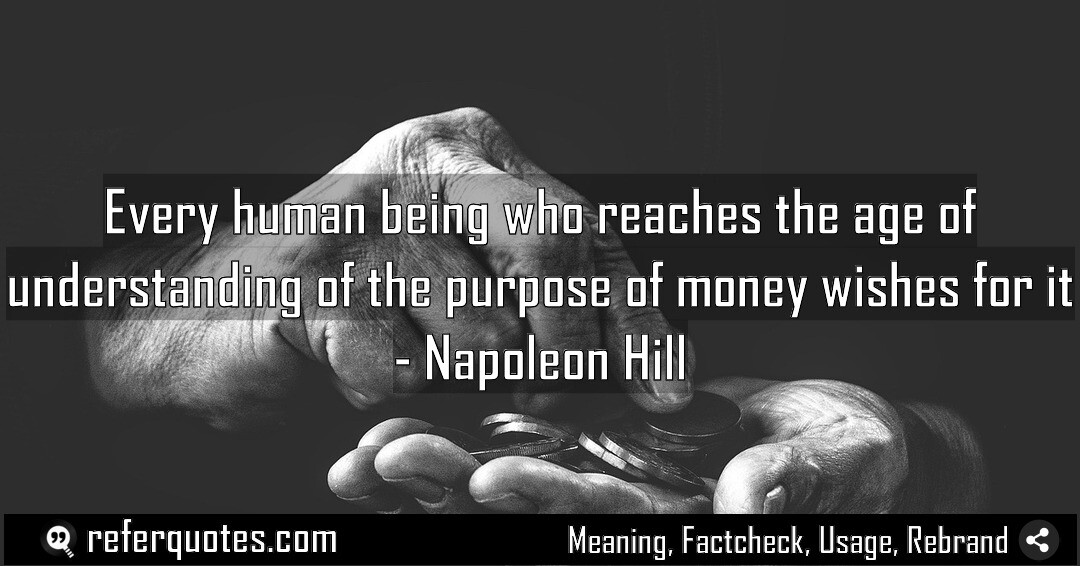
Find FAQ, origin, meaning, explanation, usage of the quote – Every human being who reaches the age of understanding of the purpose of money wishes for it.
There is nothing harsh or materialistic about this thought. It is simply honest. At a certain point in life, clarity arrives. We begin to understand what money really does. And once that understanding settles in, the desire follows naturally.
Share Image Quote:Table of Contents
Meaning
It reminds us that wanting financial security is natural, not a moral failing, and is a natural response to awareness. When we understand how money shapes stability, choice, and responsibility, the wish for it becomes part of growing up.
Explanation
Napoleon Hill is not speaking about greed or excess. He is pointing to a quiet shift that happens within us. There comes a moment when money stops being abstract. It becomes connected to safety, dignity, opportunity, and the people we care about. You realize it affects where you live, how you spend your time, and how freely you can act in the world. At that stage, wanting money is no longer shallow. It is practical. It is thoughtful. It is a sign that you see how life actually works.
Summary
| Category | Wealth (120) |
|---|---|
| Topics | desire (4), money (27), motivation (25) |
| Mood | calm (58) |
Origin & Factcheck
This quote comes straight from Napoleon Hill’s 1937 classic, Think and Grow Rich, published in the United States. It’s a cornerstone of the self-help and personal development genre. You sometimes see this sentiment misattributed to other motivational figures, but its home is firmly in Hill’s seminal work.
Quotation Source:
| Every human being who reaches the age of understanding of the purpose of money wishes for it |
| Publication Year: 1937; ISBN: 978-1-59330-200-9; Latest Edition: 2020; Number of Pages: 320 |
| Chapter 2: Desire, Approximate page from 2020 edition: 34 |
Context
The point aligns with Hill’s larger framework on success psychology. He is helping readers release shame around ambition. He frames the desire for money as the starting point of conscious creation. Before discipline or strategy can exist, permission must exist. This line gives that permission quietly and firmly.
Usage Examples
For young adult or recent grad: If you’re just starting out, this can help reframe your financial responsibility. It’s not about greed, it’s about clarity. And that’s a mark of maturity.
For Entrepreneur or Business owner: When you hesitate to charge what you’re worth, remember this; your clients understand money too. They’re happy to exchange it for real value.
For Anyone feeling guilty about their financial goals: It gives permission to acknowledge that long-held desire, reshaping it from hidden shame into purposeful energy.
To whom it appeals?
| Audience | economists (11), entrepreneurs (204), professionals (131), students (437) |
|---|---|
This quote can be used in following contexts: wealth talk,career seminar,economics class,personal finance article
FAQ
Question: Does this mean everyone is inherently greedy?
Answer: No. Hill describes is not greed, but intention. It’s the difference between wanting money as an object and understanding money as a tool for security, choice, and contribution
Question: What if someone says they don’t care about money?
Answer: : They might say money doesn’t matter, yet they deeply care about the opportunities it provides, whether that are presence at home, travel, or the ability to support a cause they believe in.
Question: Is this quote still relevant today?
Answer: Yes. More than ever, with the rise of gig work and multiple income stream, realizing that the drive for financial control reflects intelligence, not selfishness, is empowering.